craft · light
Light stencils, projection skin, and what 250 seats do to a voice
A small hall is a microscope: every watt and every reflection is visible to someone.
Most people who have sat in the hall have seen its signature effect — the performers wrapped in moving light patterns, as if the stage wore printed silk. That is not a video wall. It is a stencil: a metal or glass plate sitting in the gate of a profile spotlight, cutting the beam into shape the way a pastry cutter cuts dough. Theatres call it a gobo; the French crews I trained with called it a découpe. In a big house you need dozens of them. In a 250-seat room, four focused instruments can paint the entire stage because the throw is short and the angles are kind.
Why a stencil and not a screen
A projected image washes out the performer if the projector fights the key light; a stencilled beam IS the key light. The difference matters most in chamber rooms, where the audience sits inside the lighting design rather than in front of it. The first six rows are close enough to see the edges of each pattern, which is why the plates are etched and not printed — a printed edge blooms under heat, an etched edge stays razor.
The colour work is old-fashioned too: dichroic glass, not LED mixing. Dichroics have a depth that comes from the filter itself rather than the emitter, and under a small room's short throw the difference shows as a velvet quality in the reds and a mercury quality in the blues.
The acoustic half of the same room
Two hundred and fifty seats is an awkward size — too small for a real reverberation hall, too large for a salon's dryness. The room I tuned sits right on the seam, which is why the walls carry quilted panels dressed as decoration. Velvet absorbs the high mids where a singer's consonants live; the shallow dome above the stalls returns them. You spend months moving panels by ten centimetres and listening to where the sibilance lands.
The result is a room where an unamplified whisper at centre stage reaches the back alcove intact — but only just. Fill the seats and the acoustic changes again: a full house is the cheapest bass trap ever sewn.
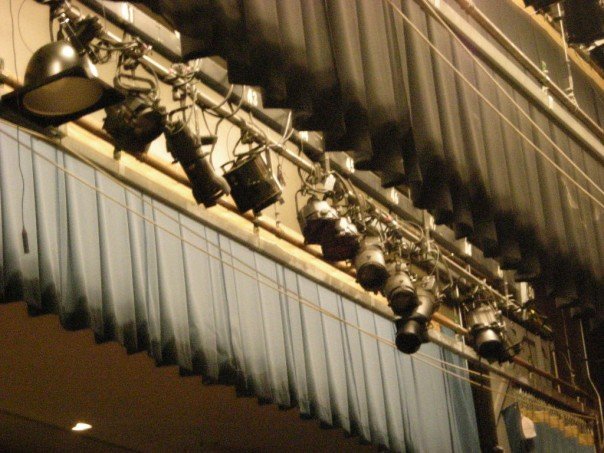
None of this is visible to an audience that is busy watching correctly. The craft is designed to disappear. When it fails — a plate slips, a lamp ages pink — the room looks suddenly cheap, and nobody can say why. That is the real measure of the work: it is only noticed when it is missing.
Claire Beaumont — Alma-Marceau, Paris 8e — independent essays, no commercial desk.